UGREEN Pakistan is an independently owned reseller and is not the official website of UGREEN Group Limited.
We use cookies for analytics and ad personalization. You can accept or decline — see our Privacy Policy.

A NAS, or network-attached storage device, is essentially a small dedicated computer with drive bays that sits on your home or office network. Instead of saving files to a single laptop or an external hard drive that can be lost, dropped, or filled up, you save them to the NAS, and every device on your network (or, with remote access enabled, devices anywhere) can reach the same files. It’s the difference between having one copy of your family photos on a phone that could break tomorrow, and having a proper, always-on storage hub built for exactly that job.
For most people in Pakistan looking at a NAS for the first time, the appeal is simple: phone storage keeps filling up, laptops die without warning, and cloud storage subscriptions add up month after month without ever actually being “yours.” A NAS is a one-time hardware purchase that you own outright, and you decide how much storage to put in it.
You don’t need to run a data center to benefit from a NAS. Typical buyers include:
If any of that sounds familiar, a NAS earns its cost back over time, especially once you compare it to years of cloud subscription payments.
The good news is you don’t need to spend a fortune to get in. The UGREEN NASync DH2300 2-Bay NAS (Rs. 99,394) is built specifically as an accessible home and office option, supporting up to 60TB of total storage across its two bays (hard drives are sold separately) and working across Windows, macOS, Android, and iOS, so every device in the house can connect to it.
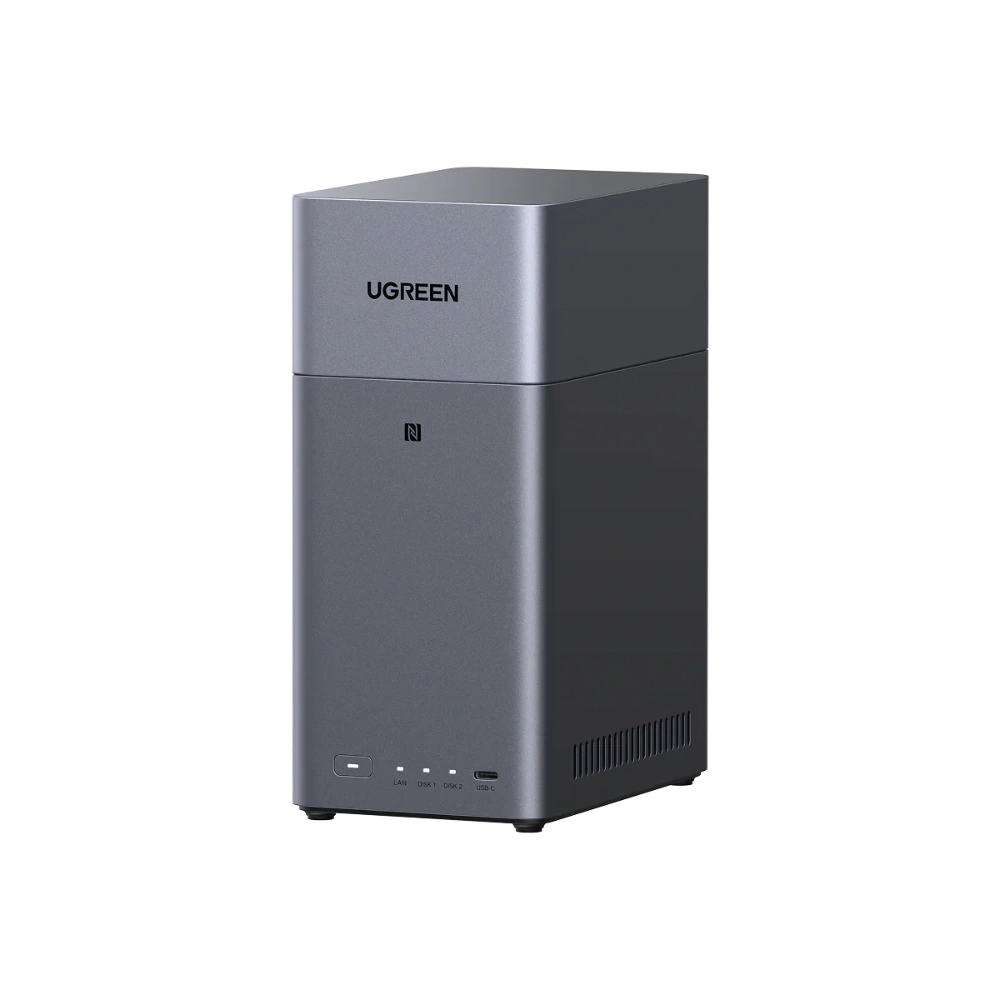
If you want more headroom for the future, the UGREEN NASync DXP2800 (Rs. 154,762) steps things up with an Intel N100 quad-core processor, 8GB of DDR5 memory (expandable to 16GB), two SATA bays plus two M.2 NVMe slots, and a 2.5GbE network port for faster transfers than a standard 1GbE connection.
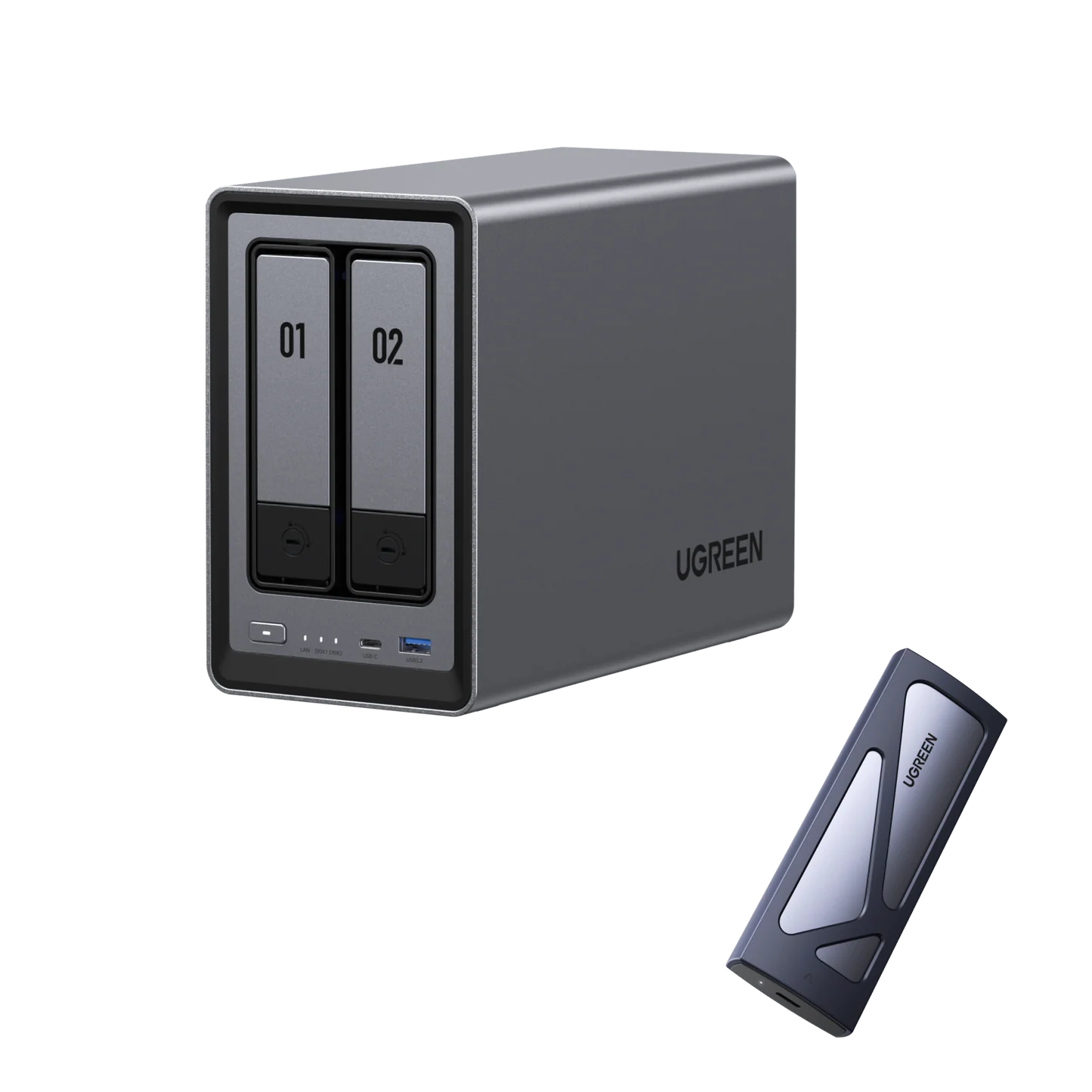
Both units ship diskless, meaning you choose and install your own hard drives based on how much capacity you actually need. That’s a deliberate design choice across the whole NAS category: you’re not locked into a fixed storage size the way you are with most consumer electronics.
Yes. Units like the UGREEN NASync DH2300 and DXP2800 are sold as diskless enclosures, meaning the NAS itself provides the bays, processor, and networking, while you choose and install compatible hard drives separately based on the capacity you need.
The UGREEN NASync DH2300 supports up to 60TB of total storage across its two bays, giving households and small offices plenty of room for photos, videos, and documents as their collection grows.
The DH2300 is the more budget-friendly entry point at Rs. 99,394, while the DXP2800 (Rs. 154,762) adds a more powerful Intel N100 quad-core processor, DDR5 memory, an extra pair of M.2 NVMe slots, and a faster 2.5GbE network port for those who want more performance.
Yes, that’s the core purpose of a NAS. Since it sits on the network rather than being tied to one device, multiple computers, phones, and tablets can connect to it, and the DH2300 specifically supports Windows, macOS, Android, and iOS.
