UGREEN Pakistan is an independently owned reseller and is not the official website of UGREEN Group Limited.
We use cookies for analytics and ad personalization. You can accept or decline — see our Privacy Policy.

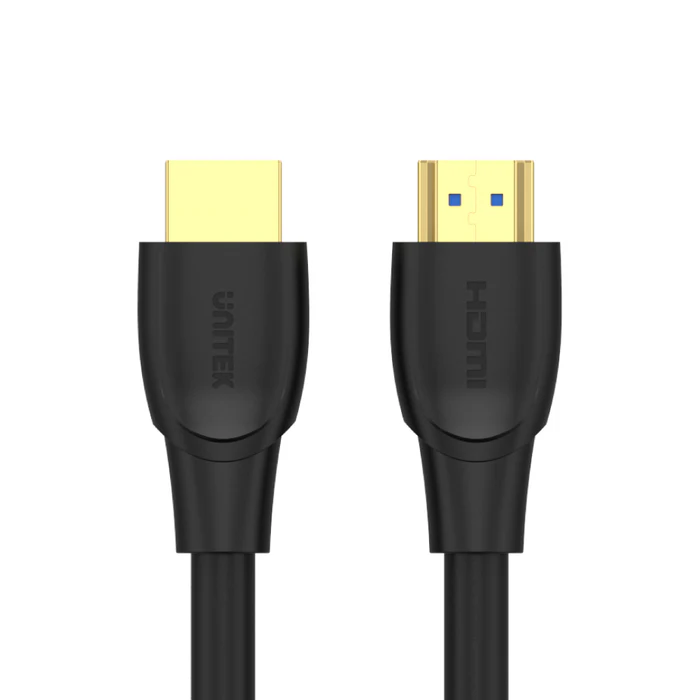
Before assuming your TV or source device has a fault, it’s worth ruling out the cable itself. Flickering, intermittent dropouts, or a complete loss of signal are common symptoms of a cable that’s underbuilt for the distance it’s covering, has worn connectors, or is simply the wrong specification for what you’re trying to do. A cable built with proper shielding and solid connectors, like the UNITEK C11041BK HDMI to HDMI Cable 5M 4K@60Hz (Rs. 5,824), which uses 28AWG conductors, gold-plated connectors, and a PVC jacket with reinforced shielding, is designed specifically to avoid these issues at a moderate 5-meter distance.
If you’ve already ruled out length, shielding, and connector quality, and the problem persists across more than one cable, the issue is more likely on the source or display side, such as an HDMI port setting, resolution mismatch, or firmware issue. But given how often the cable itself is the actual culprit, it’s a cheap and quick thing to test first.
Connectors can wear down with repeated plugging and unplugging, and if the cable was already at the edge of its rated distance or bandwidth, small amounts of degradation over time can push it into unreliable territory.
Gold-plated connectors, used on cables like the UNITEK C11041BK and UNITEK C11086GY01-3M, resist corrosion better than uncoated contacts, which helps maintain a stable connection over the life of the cable.
Longer copper runs are more demanding on a cable’s construction, which is why long cables like the UGREEN 10112 (20M) rely on multi-layer shielding. If you’re seeing issues on a long run, a fiber optic option like the UNITEK C11072BK-20M is worth considering.
Start with the cable, since it’s the cheaper and faster thing to rule out. A properly shielded, gold-plated cable like the UNITEK C11041BK (Rs. 5,824) is a reasonable, affordable first replacement to test before assuming the TV or source device is at fault.
